In this course we look at certain key project management skills and focus areas that are beneficial in the lifespan and management of any project that has a defined duration.
The focus is on three distinct time frames within the life cycle of a project with each section further divided into four modules.
Table of Contents
Or select a module from below.
Corporate booking?
Apply here
Why is this the course for you?
We approach the complexities of a Construction Project by using day to day examples to grasp a concept and principle. We then use a real time project to illustrate in a practical way how to apply the principles we have learnt.
Even if you have many years of experience within the industry we will expand your knowledge base and enable you to apply much more skills to your already extensive arsenal.
Every subject we cover and present can be applied from the moment you has processed it. Our content is extremely practical as it has not been prepared by an academic (no offense to academics), but by someone who has worked in the trenches.
If you are new to the Construction Environment, either as a graduate or from another sector of the industry this is the ideal bridging course to get you acclimatized and acquainted with skills that will elevate your performance.
As an Employer you want your people to have a certain level of skills to be able to be effective I their day to day duties. We can expedite the process of elevating their output by the practical skills we transfer in this course.
Course Outline
Section 1
The Wisdom
Pillar
Modules:
- Work Sequence
- Parties
- Contract Documents
- Project team
Section 2
The Understanding
Pillar
Modules:
- Programme
- Resources
- Estimating
- Allowables
Section 3
The Knowledge
Pillar
Modules:
- Payment Certificates & Measurements
- Allowables vs Costs
- Forecasting
- Contract Reporting
Course Overview
| Section | Project Phase | Military Analogy |
| Wisdom Pillar | Preparation | Gather Intel |
| Understanding Pillar | Planning | Strategise |
| Knowledge Pillar | Execution | Into Battle |
Our PV24 Construction Project Management Training has three distinct sections as per the table. As you can see each section is applicable at a differing stage of the life cycle of the project. Instead of simply jumping in with skills required at execution stage, we first look at preparation and then planning.
Think of it this way using the military as an example.
Is any battle or war simply won by showing up with military might? If that might is directed in the wrong place or the strategy is not applicable to the battle lines, then military might is futile and the battle has been lost before a shot has been fired.
The first stage of a military exercise is to gather intel. Once that intel had been analyzed and digested, then it’s onto the strategy phase and only then does the army send it’s might to battle as per the strategy determined from the intel.
We present our PV24 Training with similar lines.
- Firstly we identify the environment we will be working in.
- Secondly we plan in terms of resources, programme and anticipated costs.
- Thirdly, we execute and track our progress as a comparison with our planning.
Wisdom Pillar
Preparation: This is our intel phase. We look at key topics and sections that will paint a picture as to the environment we will be constructing our project in. There are key areas that we emphasize our focus on that will set our projects, and ultimately our companies up to be successful.
Understanding Pillar
Planning: During this phase we formulate our strategies and go about putting our plans onto paper. All modules follow a very systematic approach firstly by using of our basic examples to then focusing on our projects.
When we view a module we go into extensive depth within each of our mini projects in a practical demonstration of how we apply the principles to a live project.
Knowledge Pillar
Execution: This section is devoted to various strategies and reporting systems to track just how effective we are performing against our budgeted targets. Or put another way: Are we executing in line with our budgeted assumptions?
While we refer to this phase of our projects as the execution phase, we are not looking at the coal face skills and the producing of the work required for completion. We focus more on management aspects and various systems required to generate revenue, track progress, look ahead and present an overall picture of the health of our projects.
Learn from Real Projects
While many training content focuses on the theoretical knowledge and leaves you to figure out the practical application, we have two real projects as the backdrop to our course content. We have assumed there is a new road project about to be launched with sections to be made available to subcontract.
We place ourselves in the shoes of the subcontractor to serve as a practical and realistic backdrop to impart the content to you.

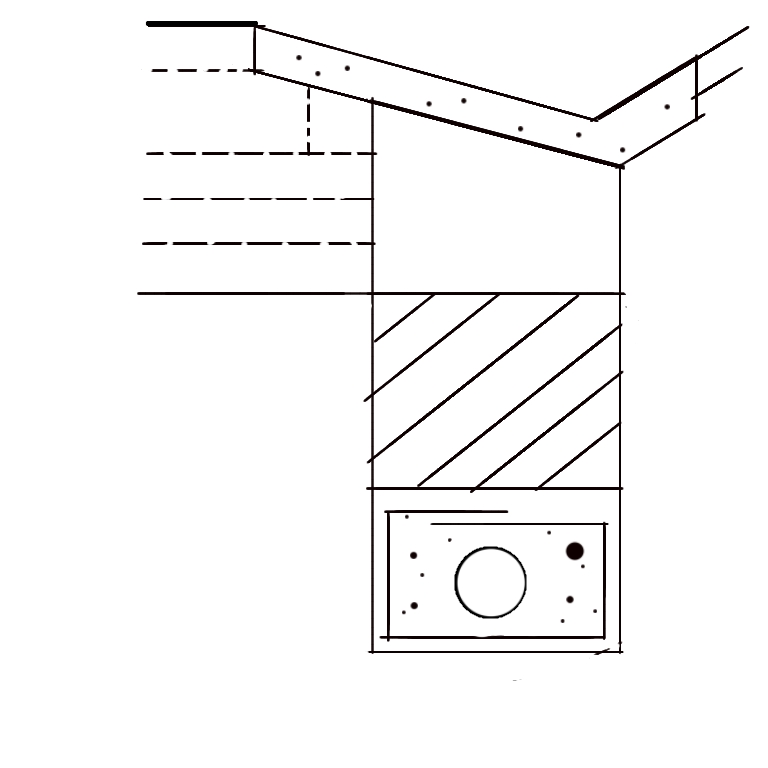
Project for a road with drainage put out to subcontract.
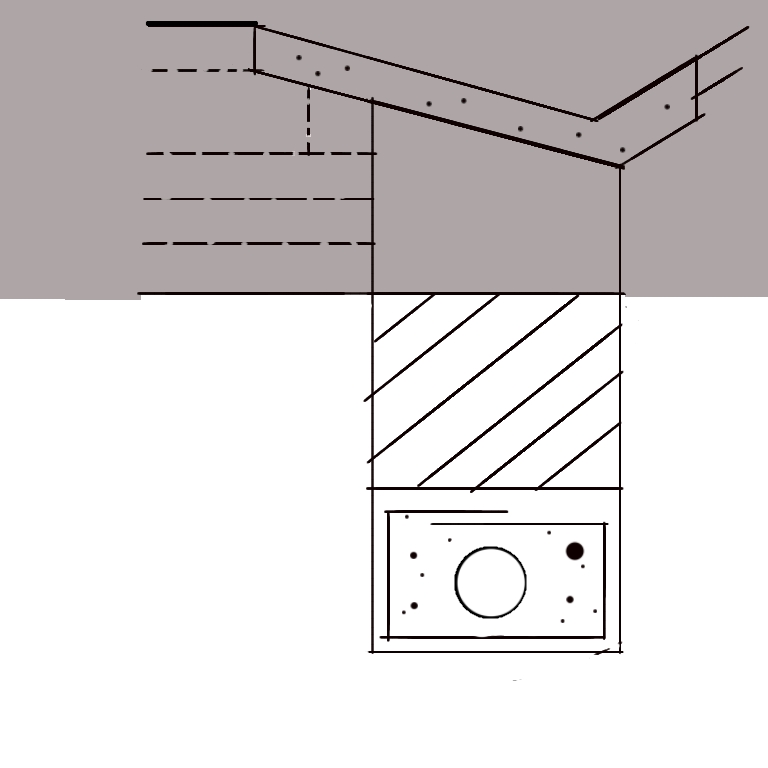
Subsoil Drainage System assigned to the COTO Specification

Concrete Lined Open Drains assigned to SANS 1200 Specification

In ten of the twelve modules we bring the practical application of the knowledge gained by showing the application on a real-life project. The only reason we do not apply the project to those two modules is that the content can be done independent of the projects.
In this way we not only give you practical principles that can be applied to your real-life projects, but we walk through the real life application of those principles with you.
Real World Comparisons
How much easier is it to grasp a concept with an unrelated day to day example? We use a few to get the principles across and then from there we apply it to our projects.
Ever had to plan a trip between two cities, or a starting point to an end destination?
How would you go about the process? Do you just take the total distance and divide by the speed limit to get your trip time?
What about delays for road works? What about lost time going through densely populated towns with robots (traffic lights) and stop signs and lower speed limits? What about refueling both driver and vehicle? How about recommended safety breaks?
All these are factors that impact a trip, not only in terms of time, but in terms of cost as well.
By looking at a trip between two cities we illustrate principles that parallel the processes of preparing our programmes or schedules for our projects. We have resources, we can look at time and we can work out costs for the trip.
Many basic principles that we would apply to our projects are expertly expanded on by this practical example.

You may think of a pizza as just a meal or a snack. And this would have zero relevance to any project, especially a construction project. But does it?
Ever made a pizza at home? Not the ready made base where you just add your toppings, but making the base from scratch. Whenever you have a recipe, there’s a specification and a Bill of Quantities as part of what you are required to do.
You need to have the correct ingredients and those must be in the correct ratio. You need to follow the prescribed steps and produce the end product in line with the recipe.
Right, a pizza recipe is nothing like a construction project, but these few principles is what we apply on a construction project.
And we’ll look at pricing the pizza base. And you get a free recipe for the pizza base as part of your course notes. We said that we are practical.

You know the gym. That place that remains deserted between Valentine’s Day and New Year’s and goes into overdrive for New Year’s Resolution guilt trips.
What does a gym routine possibly have to do with managing a project?
If your gym routine has an exercise followed by moving between stations, it would parallel any project in many ways. Perhaps your routine is a series of exercises between different stations and you repeat the drill a few times. I know that the process of constructing a project may follow that concept.
In a gym routine you would warm up, work out, move between stations and finally cool down. That does sound a bit like some of the steps in a any project: Mobilize, Produce the Work, then Demobilize.
Unrelated, but relevant in illustrating the point.

When you shop online you don’t just magically get the product after deciding that you want it. There are steps to follow. And each online merchant will have their own policies and protocols that need to be followed. And then there’s the Terms and Conditions
You may not have thought about it in this way, but purchasing online has its own set of documents and records of the transaction, and their own terms and conditions. Similarly a project will have its own set of documentation that need to be adhered to that govern certain processes on the project.
If you have kids, you don’t give them free reign to purchase anything they want to online. You would have a policy and procedure that needs to be followed where you make sure you are happy to spend money on something that they want.
Likewise on a project the Contractor can’t just invoice and give it directly to the Client. There are policies and procedures that need to be followed to be in line with the contract and the terms and conditions.
Who would benefit from this course?
Any construction professional who is employed within the built environment, including:
- Owners and Managers of SMME construction companies
- Construction Quantity Surveyors
- Commercial Managers
- Construction Engineers
- Project Managers
- Site Agents
- Contracts Directors
- Graduates who are entering the Construction Field as a bridging course
- Qualified Engineering or QS professionals moving from another field into the Construction Environment
Course Presenter

Darrell van Rooy
Darrell has been involved in the South African Construction Industry since 1995 and has worked on numerous large projects during this time. He has a vision to see construction companies large and small be more effective and efficient in the projects they undertake.
He is responsible for the design and development of the flagship PV24 Project management training course as well as other courses being presented.
Darrell is the founder of DAVARO Construction Support Services that has a vision to add value by providing support services to many construction companies.
Or select a module from below.
Corporate booking?
Apply here